
The Inspection Is Finished. What Happens to the Issues?
Every scheduled inspection is marked complete. The report looks good. Then the next inspection records the same issue in the same place.
The team may be completing its rounds exactly as asked. The missing step is what happens after a finding is recorded. Finishing a form and resolving an issue are two different events, and both need a clear record.
Write the finding for someone who was not there
“Needs attention” is not enough to assign work. Describe the location, the item, and what was observed. Add a photo when it helps someone identify the problem. Record the observation without guessing at a cause that has not been assessed.
Compare “sign broken” with this example:
Location: Level 3, outside Meeting Room 3B.
Observation: The room identification sign is loose at the lower fixing. A photo is attached showing the sign and its location beside the door.
Next action: Building operator to assess the fixing and arrange the repair.
Owner and review: Assigned to the day operator, with a status review at the next morning handover.
The example gives the next person enough information to find and assess the issue. It does not turn the inspector’s observation into a diagnosis or prescribe a repair method.
Give the finding a next step
Before an issue leaves the inspection review, decide what it needs. Some findings require work to be assigned. Others need clarification, an approval, or assessment by an appropriate specialist. Use the building’s established escalation process for urgent concerns rather than waiting for the routine review.
Whatever the route, name the person responsible for the next action. A team name can be useful for routing, but somebody still needs to know they are expected to respond.
Keep the original observation connected to the work
If a finding becomes a service request or work order, carry over the location, description, and relevant photos. Keep a reference back to the inspection. That connection lets a colleague understand why the work was raised and whether the eventual repair addressed the original observation.
Do not assume that creating another record means the issue has been accepted. Check that the receiving person has the information and access needed to proceed. An incomplete handover simply moves the waiting point to a different screen.
Define the evidence needed to close it
For the loose sign, a completion note and a clear photo may be sufficient under the team’s normal process. Other work may need confirmation from the responsible contractor or a separate check. Agree on the appropriate evidence when assigning the work, rather than discovering at closure that nobody knows what was done.
If an inspector sees that the issue remains, record that observation against the existing history where possible. Avoid opening a fresh record every week that hides how long the original problem has been waiting.
Review the exceptions, not every completed form
Give the regular inspection review three short lists: findings without an owner, findings waiting beyond their agreed review date, and locations where the same issue keeps returning. These lists lead to decisions. A count of completed forms tells you that checks happened, but it cannot tell you whether the findings were resolved.
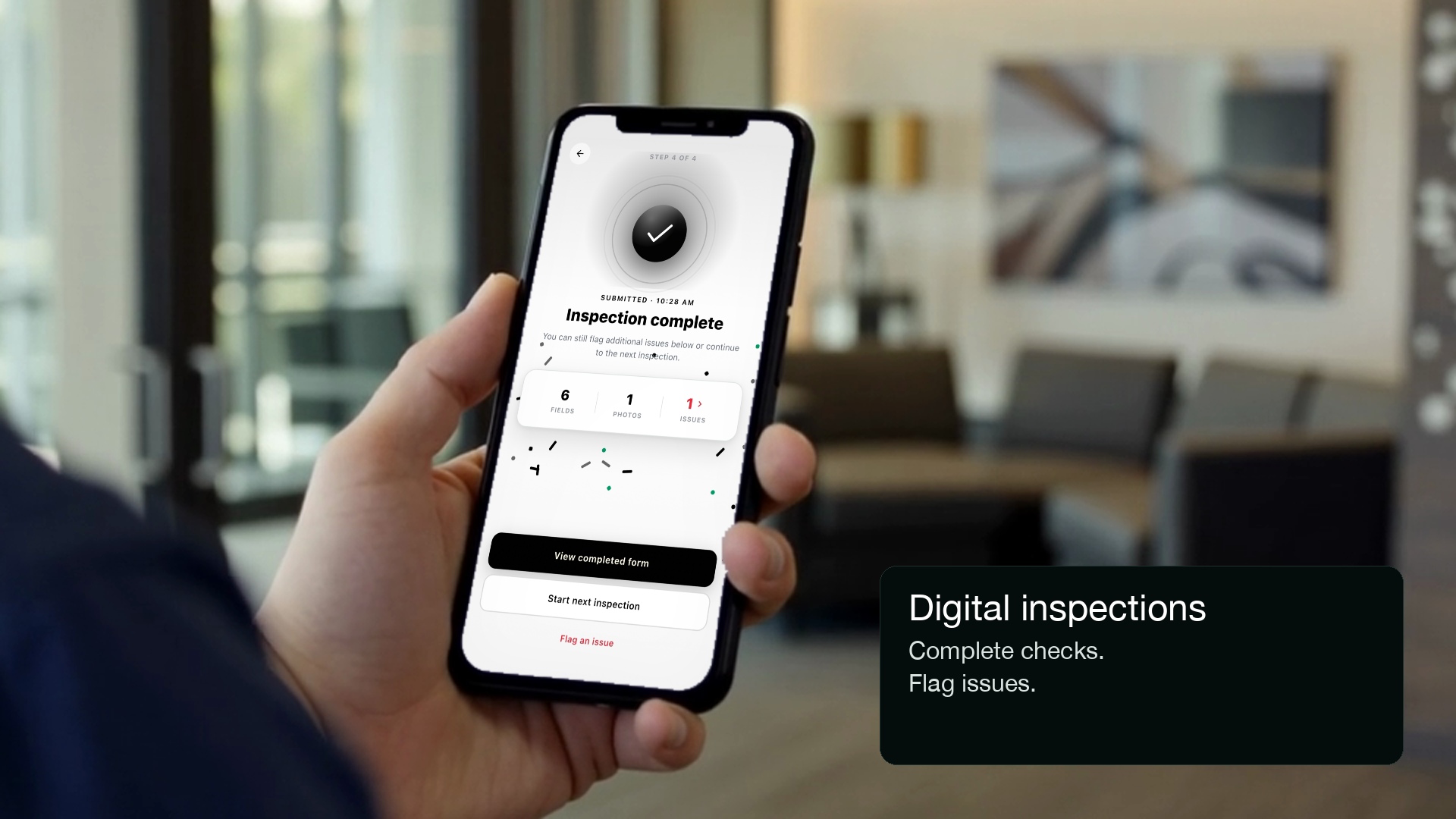
Caret’s digital inspections let teams capture evidence and flag issues while on site. The operating discipline comes next: decide who acts, preserve the context, and confirm the outcome. A completed inspection should leave a clear path for every issue it identifies.